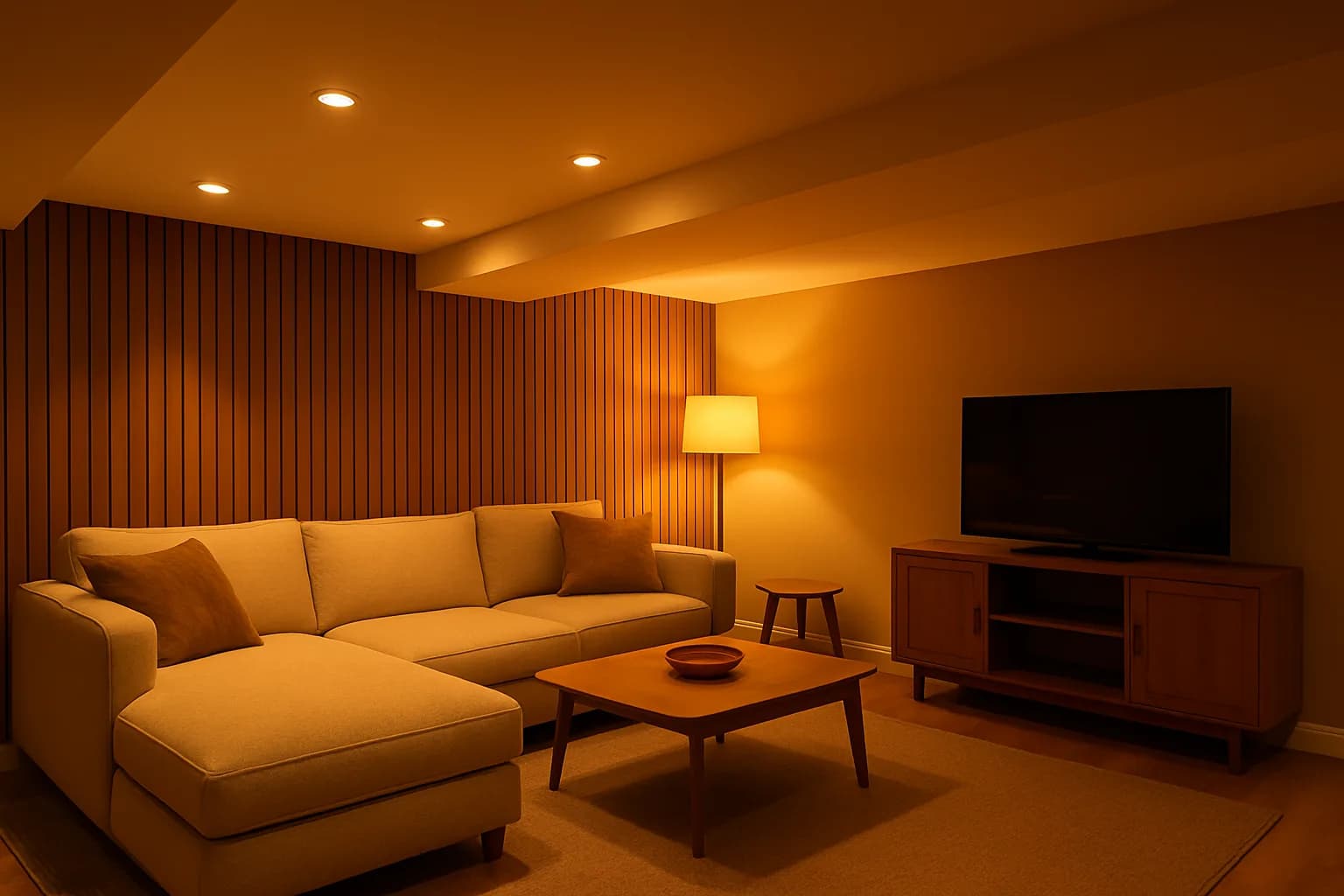
A basement is considered "legal" in Ontario when it has: a building permit on file, code compliance under the Ontario Building Code, municipal zoning approval, a final inspection sign-off from the local Building Department, and (for rental units) disclosure to the home insurance provider. That's the full test.
Everything else is language people use casually — "permitted," "up to code," "approved" — that boils down to those five things. A finished basement without them is not legal, even if it looks great.
The Five Boxes That Make a Basement Legal
Any Ontario basement that's used as a dwelling unit — meaning someone sleeps there and it has cooking + bathroom facilities — needs to meet all five of these:
1. Building Permit On File
Every Ontario basement dwelling unit requires a building permit from the municipality where the property sits. The permit records what work was done, references the drawings, and creates the inspection schedule that follows.
Kitchener — permits on file at 200 King St W, searchable in the City of Kitchener building permit portal. Waterloo — permits at 100 Regina St S, listed at City of Waterloo Building Standards. Cambridge — permits at 50 Dickson St, listed at City of Cambridge Building. Guelph — permits at 1 Carden St, listed at City of Guelph Building Services. Woodstock — permits at 500 Dundas St, listed at City of Woodstock Building.
A basement that was finished in 1998 by the previous owner without a permit is not legal, even if it's in perfect shape today. No permit means no record, no inspection history, no compliance.
2. Ontario Building Code Compliance
The Ontario Building Code (OBC) sets the technical requirements. For a legal secondary suite, the key requirements are:
- Ceiling height — 1.95 m (6'5") in habitable rooms
- Bedroom dimensions — 7 m² floor area minimum, 2 m minimum in any direction
- Egress window — every bedroom needs a window with 0.35 m² clear opening area minimum, 380 mm clear opening height minimum
- Fire separation — 30-minute fire separation between the suite and the primary unit (typically 5/8" Type X drywall + fire-rated doors + sealed penetrations) — see legal vs illegal basement
- Smoke and CO alarms — interconnected throughout both units
- Private entrance — dedicated entrance not requiring passage through the main unit (in most cases)
- Electrical — separate subpanel or metered circuits, wired by an ESA-registered electrician
- Plumbing — full bathroom (toilet, sink, tub/shower) and full kitchen (if a self-contained unit)
A basement that meets some of these but not all is not legal. Every one is required.
3. Municipal Zoning Approval
The zoning by-law for your specific address must permit a secondary suite. Since Ontario Bill 23 (More Homes Built Faster Act, 2022), most residential zones in Kitchener, Waterloo, Cambridge, Guelph, and Woodstock now permit secondary suites as-of-right. But not all.
Zoning restrictions still apply to:
- Certain heritage districts (parts of Downtown Kitchener, Uptown Waterloo, Downtown Guelph, Old Woodstock)
- Some near-university streets in Waterloo (lodging house caps)
- Grand River Conservation Authority floodplain-regulated areas (parts of Cambridge Galt/Preston, Brantford)
- Some special zones with limits on lot coverage or parking
Zoning check happens on the first site visit. If it's a "no" at your address, that answer comes back to you before you sign anything.
4. Final Inspection Sign-Off
The final inspection is the endpoint of the permit process. A municipal building inspector walks through the completed suite and confirms every code requirement has been met. If everything passes, the inspector issues a completion certificate (or its equivalent).
An unfinished permit — one where construction started but inspections weren't completed — is technically not a legal basement. The permit is still open. The Building Department can order the work to be completed or reversed.
5. Home Insurance Disclosure
If the basement will be rented, the home insurance provider needs to know. This is what converts the property from an owner-occupied home policy to an owner-occupied-with-rental policy — similar to how Tarion new home warranty coverage requires accurate disclosure of the property use.
The additional insurance cost is small — typically $200–$500/year — but the coverage change is critical. If a fire, flood, or tenant injury happens in the suite, the insurer needs to already have the rental use on file. Without disclosure, the claim can be denied.
Some people build legal suites for family (in-law suites) and don't rent them. Insurance disclosure is still recommended even for in-law suites, but the insurance category is different.
The Casual Language That Trips People Up
Some phrases we hear from KW homeowners that don't mean what people think:
"It's up to code." Usually means: the previous owner or contractor believed it was built well. Doesn't necessarily mean it has a permit, was inspected, or would pass a current inspection. Not the same as legal.
"It's permitted." Sometimes means: a permit was pulled for something at some point in the property's history. Doesn't necessarily mean the current basement configuration is on that permit. Not the same as legal.
"It has all the safety stuff." Means: someone installed smoke alarms and possibly fire-rated doors. Doesn't address the other 6–8 code requirements. Not the same as legal.
"The inspector was here." Sometimes true, sometimes not. If it was an ESA electrical inspector, that's not the same as a Building Department final inspection. Also, a passing framing inspection doesn't mean the whole permit is closed. Not the same as legal.
The only way to confirm a basement is legal is to pull the permit history from the municipality. Every KW-area city offers this — usually through the online building permit portal or by request.
"Legal for What Use?"
Ontario recognizes several categories of basement use, and the legal requirements scale up with the intensity of use:
- Finished basement (rec room, home office, family space) — permit for framing/plumbing/electrical if applicable, no egress or fire separation requirement, no zoning trigger. Straightforward.
- Basement with a bedroom (single-family use) — permit required, egress window in the bedroom required, smoke alarm required. Still single-family.
- Legal secondary suite (rental) — permit required, full code compliance, zoning check, final inspection, insurance disclosure. Most demanding.
- Legal accessory dwelling (garden suite or above-garage suite) — separate category, similar requirements to secondary suite.
If you're building an in-law suite for family, you're somewhere between category 2 and category 3. Because someone will sleep there, the fire separation and egress requirements still apply.
Who Actually Cares Whether Your Basement Is Legal
- The Building Department — cares while the permit is open and during any complaint investigation.
- The Fire Department — cares during any fire incident or fire prevention inspection.
- Your home insurer — cares when you file a claim.
- The CRA — cares about undeclared rental income.
- A future buyer — cares because it affects what they'll pay for the house.
- An appraiser — cares because it affects the value they'll credit.
- A mortgage lender — cares because it affects the underwriting.
- Your tenant's family lawyer — cares if the tenant is injured.
The list of people who don't care whether your basement is legal is short. The list of people who do — and who can cause expensive problems if it isn't — is long.
The Contrast Ten Years Later
A 2016 KW basement finish where the owner "knew a guy" and skipped the permit was almost normal. Enforcement was sparse, insurers didn't audit, and the housing market was more forgiving.
A 2026 KW basement finish where the owner skips the permit is a walking liability. Enforcement is up, insurance audits are up, and buyers are asking specifically about permits during offers. The gap between legal and illegal has grown, not shrunk.
Ready to Build a Legal Basement or Verify Your Existing One?
We build permitted, code-compliant secondary suites across Kitchener, Waterloo, Cambridge, Guelph, Woodstock, and Brantford. We also assess existing basements and tell you honestly whether they're legal and what it takes to bring them into compliance.
→ Book a free site visit → Call (226) 887-0906 → Read the legal basement service page for the full build scope