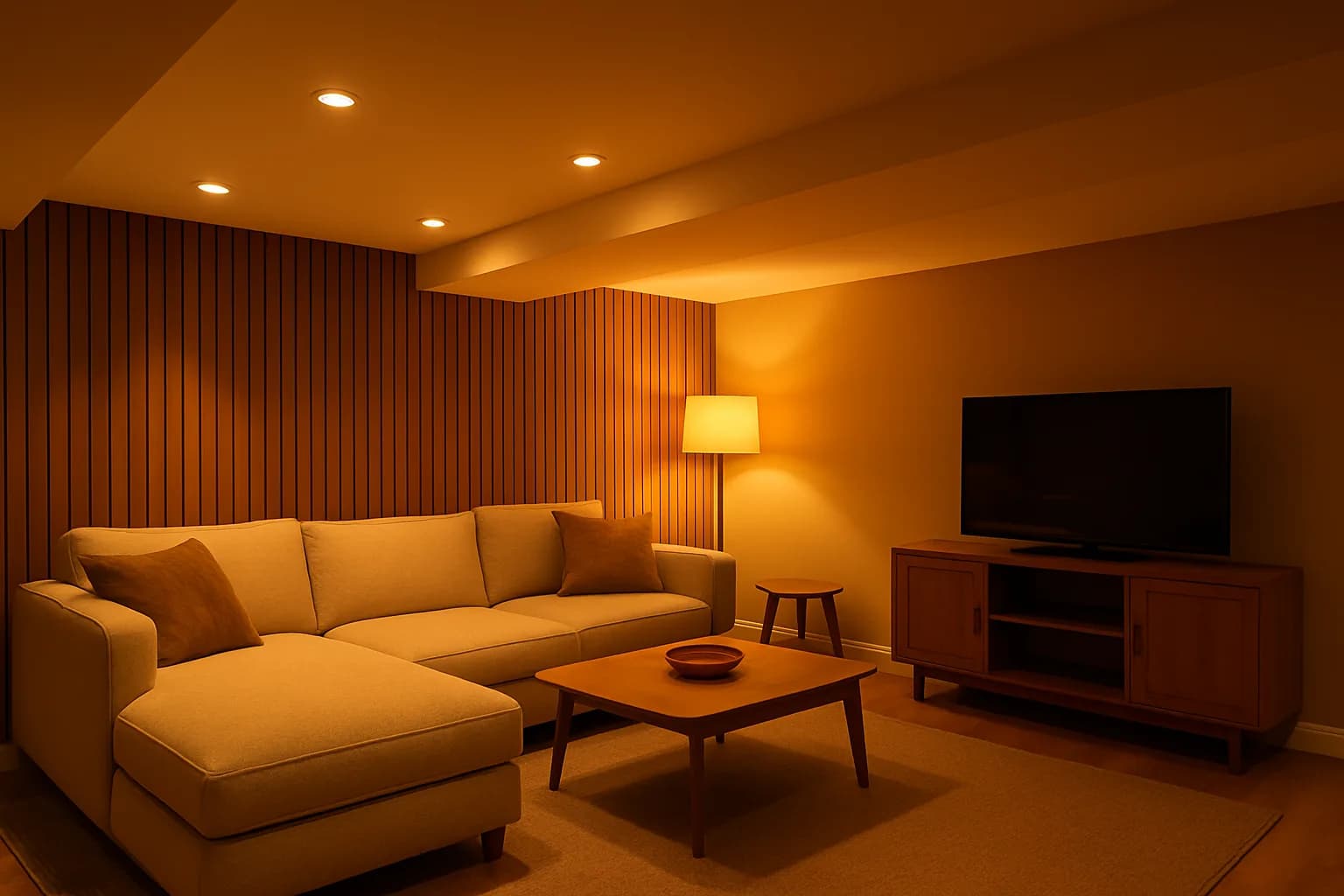
A legal basement in Ontario is a basement dwelling with a building permit on file, fire separation between units, egress in every bedroom, 6'5" minimum ceiling, and a final inspection certificate. An illegal one is anything that skips even one of those.
That is the whole answer. Everything below is the reasoning, the fines, and the checklist so you can look at your own basement and know which side of the line it's on.
The House Looks Identical From the Street
I've walked into two Kitchener basement suites in the same week that looked exactly the same. Same drywall, same LVP flooring, same IKEA kitchen, same bathroom. Both had a tenant paying rent.
One had a permit on file at 200 King St W and an occupancy certificate in a folder in the kitchen drawer. The other did not.
The one with the permit costs the homeowner about $350/year in additional insurance and generates $1,700/month in tax-reportable rental income. The one without: the homeowner has been quietly sweating for four years about what happens the day the tenant complains to the City, or the day something goes wrong.
Same house on paper. Very different risk profile.
What Makes a Basement Legal in Ontario — The Actual Checklist
The Ontario Building Code + Fire Code + municipal zoning = the three-part test. Miss any of them and the unit is not legal.
Ontario Building Code minimums (these do not vary between Kitchener, Waterloo, Cambridge, Guelph, or Woodstock):
→ Ceiling height — 1.95 m (6'5") minimum in habitable rooms. Below beams and ducts, drops to 1.85 m (about 6'1"). Full detail: legal basement ceiling height requirements in Ontario.
→ Bedroom floor area — at least 7 m² (75 sq ft), no dimension less than 2 m.
→ Egress window in every bedroom — 0.35 m² minimum clear opening, at least 380 mm clear opening height. Big enough for a person to climb out in a fire.
→ 30-minute fire separation between the secondary suite and the rest of the house. Usually 5/8" Type X drywall on the ceiling and shared walls, fire-rated doors between units, and fire caulking on every pipe or duct penetration.
→ Interconnected smoke alarms and CO detectors throughout both units — the ones upstairs beep when the one downstairs beeps.
→ Separate private entrance in most cases. Can be a walk-out to grade, a side door with a fire-rated separation to the main entrance, or a new stairwell.
Municipal add-ons (these do vary):
- City of Kitchener — permitted as-of-right in RES-1 through RES-5 zones, requires one additional off-street parking space, permit fee $600–$1,200. Apply through the City of Kitchener building permit portal.
- City of Waterloo — permitted as-of-right in most residential zones with lodging-house caps near Northdale and Old Waterloo, permit fee $600–$1,200. Details at City of Waterloo building standards.
- City of Cambridge — permitted as-of-right in most R zones, floodplain check with the Grand River Conservation Authority required for Grand River-adjacent properties, permit fee $600–$1,200.
- City of Guelph — permitted as-of-right, some near-university restrictions, permit fee $700–$1,400.
- City of Woodstock — permitted as-of-right, permit fee $500–$1,000.
The last box you check is the final inspection. Once the City building inspector signs off, you have paperwork proving the unit is legal. That paperwork is the whole difference.
What Makes a Basement Illegal — And What Actually Happens
An illegal basement is any basement dwelling unit that skipped one or more of the above. The most common shortcuts:
- No permit was pulled. Framing went in on a Saturday, drywall the next weekend, and the "in-law suite" grew a lock on the door.
- Egress windows were never cut. A finished bedroom in an old Kitchener basement with 24"x18" windows is not legal, and Grandma sleeping in it does not change that.
- Fire separation was skipped or done with regular 1/2" drywall. Type X is thicker and slower-burning. Regular drywall is not.
- Ceiling is under 6'5". Common in pre-1950s Kitchener, Cambridge Galt, and Guelph downtown homes. Owner "figured it would probably be fine."
- Zoning doesn't allow a second unit at that address. Rare in 2026 after Ontario's More Homes Built Faster Act, but still exists in some heritage districts and near university campuses.
Here is what actually happens when an illegal basement gets discovered:
Municipal enforcement. Kitchener, Waterloo, Cambridge, Guelph, and Woodstock all issue orders-to-comply under the Ontario Building Code Act. Fines start at $500/day and escalate. You either legalize the suite (which usually means opening walls back up to install fire separation and egress) or shut it down.
Insurance denial. This is the one that ends people. If a fire starts in the illegal suite and destroys the house, your insurer can — and does — deny the claim on the grounds that the property was operating outside the declared use. Six-figure loss on the house, plus tenant injury liability.
Home sale problems. Appraisers do not credit unpermitted work. Lenders sometimes require a holdback at closing. Buyers get spooked. A $90K unpermitted basement adds roughly $0 to your appraisal.
Tenant lawsuits. Illegal unit + tenant injury = personal liability. You are the deep pocket.
Ten years ago you could get away with an under-the-table basement suite because enforcement was inconsistent. In 2026, with the housing crunch and Ontario's More Homes Built Faster Act pushing municipalities to formalize secondary suites, the City has more staff, better satellite data, and neighbours who report because the parking is annoying. Not gatekeeping any of this — it's all on public record.
How to Check If Your Existing Basement Is Legal
Walk through this list. If you can answer "yes" to all of them, your basement suite is probably legal. If not, you have work to do.
- Building permit was pulled for the finishing work — you can find the number online in the City's permit portal
- Ceiling is 6'5" or higher in every habitable room
- Every bedroom has a window big enough to climb out (roughly 24" x 24" clear opening minimum)
- 5/8" Type X drywall on the ceiling and any wall shared with the upstairs unit
- Fire-rated doors between the units
- Smoke alarm and CO detector in the suite, interconnected with the upstairs alarms
- Private entrance that doesn't require walking through the main unit
- Final inspection sign-off from the City
- Your home insurance policy shows the suite as declared use
Any "no" boxes above are where the legal risk lives.
Making an Illegal Basement Legal — Yes, It's Possible
You can retroactively legalize most illegal basement suites. It costs more than doing it right the first time because you're usually opening finished walls back up. But it's better than the alternatives (which are: sell the house, evict the tenant, or wait for something bad to happen).
Rough scope on a Kitchener-Waterloo retroactive legalization:
→ Egress window cut through poured foundation — $3,500–$6,500 per bedroom → Rip drywall, add Type X fire separation, re-tape and paint — $6,000–$12,000 → Fire-rated door replacement — $1,500–$3,000 → Interconnected alarm system — $600–$1,200 → Permit + inspections — $1,000–$1,800 → Ceiling height fix (if needed) — $15,000–$30,000
Total retroactive legalization typically runs $12,000–$50,000 depending on what needs to change. Painful, but a fraction of the cost of a denied insurance claim.
Ready to Get a Legal Basement Built or Retrofitted?
We build legal basement suites across Kitchener, Waterloo, Cambridge, Guelph, Woodstock, and Brantford. We also do retroactive legalization on existing unpermitted suites.
Free site visit. We walk through the basement, measure the ceiling, look at the windows, and tell you exactly what it will cost to make it legal or build a new one.
→ Request a free quote → Or call (226) 887-0906 → Read the full legal basement service page for what's included